

Last July, Liz Coalts brought her daughter to a North Carolina DMV office to get her learner’s permit. They arrived at 4 a.m. There was already a line wrapped around the building, and they ended up standing next to a dumpster. Liz had come prepared. She’d researched Facebook groups for “best walk-in strategies” and had, in her words, a playbook. Seven hours later, they had the permit.
Having worked in two other state DMVs, Liz knew something about how a functioning DMV ought to work. And she knew this was not that. A few months later, she joined the North Carolina DMV as its new Deputy Commissioner of Modernization.
The DMV Commissioner Paul Tine, Liz, and cohort of other new leaders inherited was the one North Carolinians knew firsthand: one that required booking appointments 90 days out and inspired “DMV survival guides” on Facebook.
A year later, the same DMV looks very different. The average wait is now under 21 minutes, an 88 percent drop since April 2025. Examiner vacancies are down from 12 percent to 6 percent; appointments book out a week, not three months. It’s not the only turnaround of its kind — California cut its own DMV’s worst wait times roughly in half a few years back — but it’s a remarkable one.
It wouldn’t have happened if the DMV hadn’t been able to fill a whole lot of empty seats. Because it took the state an average of six months to fill vacancies last year, officials leveraged an emergency authority to bring on 64 people in 30 days. They also decided to improve their text-messaging technology by putting it into users’ hands rather than asking if old requirements were met. And, of course, they brought new leadership with an ambitious vision including a Deputy Commissioner of Modernization who had stood in that 4 a.m. line.
This is the kind of win we have become used to hearing about. Commissioner Tine, Liz, and the whole team at NC DMV deserve enormous credit for this turnaround, and the governor and his team deserve the same for empowering them to hire fast, streamline procedures, and fast-track technology. But the story usually ends there. Though every turnaround or epic implementation win (think the CHIPS and Science Act) seems to require these carveouts, the political will to change the defaults in systems is rarely there. These wins are not proof that the system works; in fact, they are clear evidence that the system only works when it is circumvented.
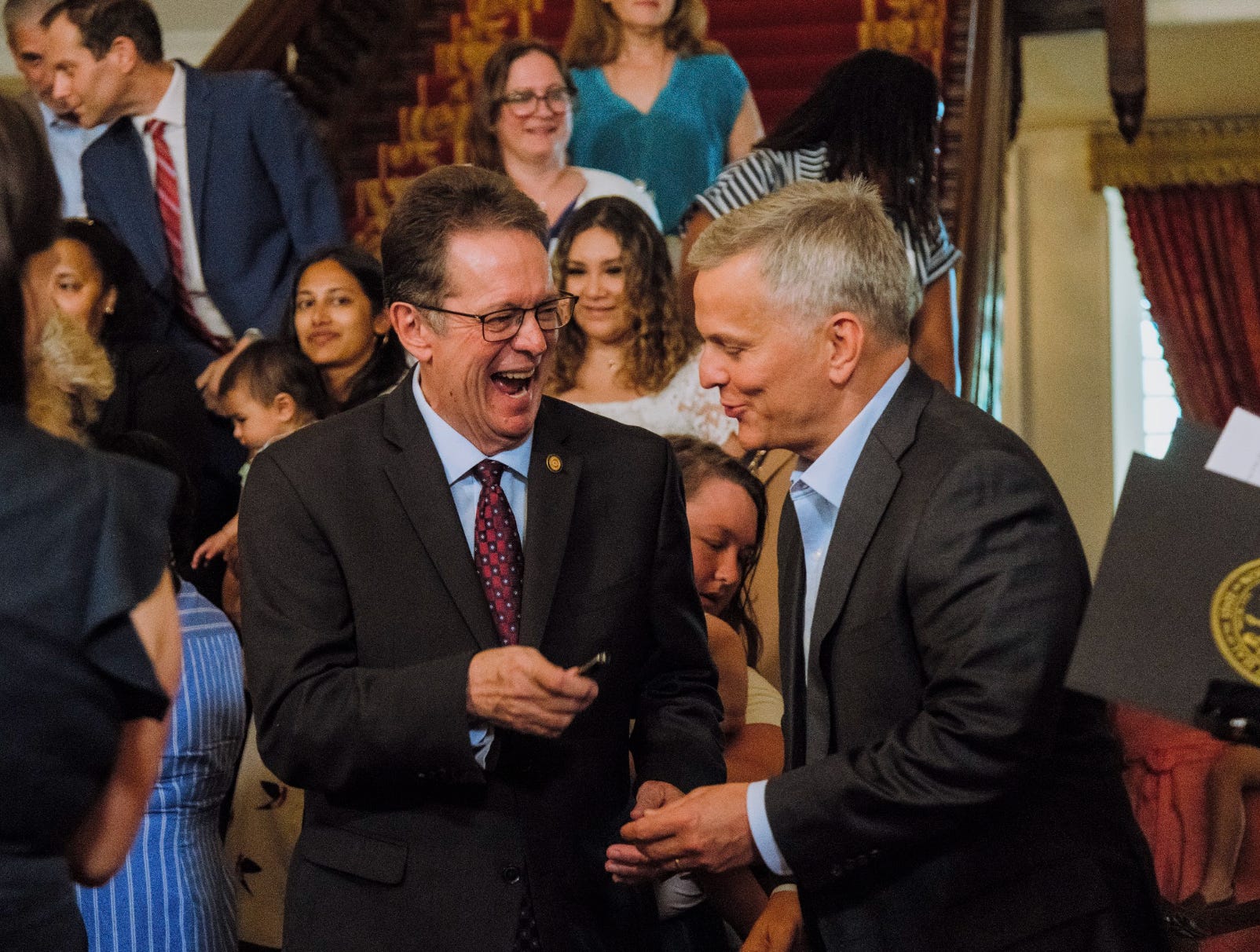
Happily, the story does not end there this time. Governor Josh Stein and his HR Director, Staci Meyer, decided to not only acknowledge that evidence but to address the system’s interlocking problems at their roots. That’s how the biggest rewrite of the state’s civil service law in 60 years got started.
What Was Broken
Every aspect of North Carolina’s HR system needed fixing. Start with hiring, not just at the DMV, but anywhere. If you want a job, you first need to figure out which website you need to use to find a job. North Carolina has at least three paths to finding a state job, and it is not often clear which one is best: NCWorks? JoinNC? Other internal and external portals, even a local government job search? After you find a path, you need to figure out which of 1,450 job titles applies to you — an Administrative Specialist I? A Purchasing-Finance Assistant? Then you feed the right forms into a system that swallows them whole. Then wait.
Managers share similar woes from a broken system as they have a hard time finding and keeping the right people in the right jobs. When an employee excels, a manager can’t easily give them a raise or a promotion. Getting an “in-grade salary adjustment” — bureaucratese for paying a good employee a bit more without a full promotion — is a maze of finding the money, doing the forms, trying to persuade management, and waiting. Some of the best people just leave rather than navigate it.
The system looks no better for poor performers. In 2025, 99.4 percent of state employees received a performance rating of satisfactory or better. State HR executives bluntly told our team at Recoding America that the rating system’s actual function was not to help employees improve, but to build a paper trail for discipline or termination. But it wasn’t doing that either. In 2025, only 13 employees were let go for poor performance, about .025 percent of the workforce. Imagine supervising almost 4,000 employees, and only one of them is terrible at their job.
These kinds of numbers have many causes across law, policy, and culture. But one of them is North Carolina’s five-step process for dismissing poor performers — you get a warning of a warning and a chance to improve, then you get a warning and a chance to improve, then you can get a demotion and a chance to improve, then you get a letter, then you get a dismissal.
None of this is unique to North Carolina. Federal HR has long run on largely the same logic: 90 percent of hiring decisions come down to resume keyword-matching, only 0.6 percent of employees get a rating below “successful,” and most supervisors managing a poor performer say they tried ten or more approaches before giving up. These things are changing, which I’ll write more about in the coming months. But it’s clear that North Carolina’s numbers are just the state-government strain of the same disease that’s afflicted our federal system.
“It’s extremely frustrating,” a manager at one state agency told us in an engagement session. “Our managers sometimes feel like HR is working against us instead of for us.”
The state’s response
North Carolina has been working on this problem for well over a year, mostly out of view. State HR Director Staci Meyer is in many ways a classic public servant, having worked for the last 10 governors across 5 agencies. Her deepest background is in law and the arts. She stuck around for the new governor because he told her that he understood the state’s HR was broken and she could help fix it. Credit to them both. They then made the brave decision that it was time for a change. The state got to work.
First, a 2025 law gave the state special hiring flexibility that let DMV fill positions using temporary staff. That kind of move is useful, and it’s also exactly the sort of pressure-relief a broken system runs on: it makes the status quo bearable without changing it. I’ve written before about the difference between reform that builds toward a genuinely new operating model — call it H2+ — and reform that just lets off enough steam to keep a broken system limping along, H2-. A lot of hiring reform is the second kind: a special authority here, a workaround there, each one a release valve that makes everyone a little more willing to tolerate whatever the valve didn’t fix.
Staci Meyer didn’t want a release valve. She wanted a new operating model — one built around outcomes, flexible enough to test approaches, measure them, and adjust based on what actually works. That meant doing two things. First, rewriting the statute broadly enough to allow real flexibility across hiring, classification, pay, performance, and discipline, and doing it in public, with a Republican legislature and a Democratic governor standing together at the signing. Second, it recognizes that the words on the page are only half the job. So the state is also using a test-and-learn model in its execution — writing HR policy with the managers who’ll actually use it, standing up a statewide surge recruiting team, trying out different ways of giving employees feedback and keeping the ones that work, and rebuilding the technology underneath all of it so it’s usable by actual humans.
Working the full stack
So what does the Public Modernization Workforce Act,( S.L. 2026-40), actually do?
On hiring, it creates more ways in: apprenticeships and other work-based learning, skills-based hiring that looks past credentials nobody needs for the job, and a fast lane letting strong temporary employees convert to permanent status after three months. Lateral transfers within agencies get easier too, which sounds small until you remember that moving sideways in state government has historically been nearly as hard as entering it from outside.
On retention, the law leans on benefits — expanding parental leave, authorizing bereavement leave, and increasing flexibility on bonuses — alongside a budget deal that provided overdue raises to many state employees. While I don’t think compensation is the core challenge of civil service systems, of course it matters. And parental leave or bereavement leave are the kinds of things that may sound marginal until you need them.
On performance, the state has reworked its policy and is redesigning its tech platform to move toward a feedback culture that supports more informal check-ins between employees and managers. These check-ins shift the conversation to their growth and can now run on a three-part prompt (continue, start, stop) with minimal administrative burden. Agencies will also have the option to simplify ratings to a single, summative rating based on three intuitive questions, instead of a patchwork of organization-specific criteria. The final rating is now designed to connect to factors that matter, like pay, recognition, whether one moves up.
Additionally, a pilot will let employees give upward feedback on their supervisors and will strongly encourage, but not require, a distribution across ratings. It’s an interesting contrast with the usual Lake Wobegon, where everyone is above average, but also with the federal Office of Personnel Management, which is moving to require a specific distribution. Testing both approaches at once is federalism in action and a great learning opportunity.
On discipline, the statute directs the Office of State Human Resources and the HR Commission to write a new discipline policy, giving the state a chance to shorten timelines while preserving due process. Much of the padding in North Carolina’s old disciplinary process wasn’t required by the underlying law at all. It’s a story about what happens to a reasonable law after the courts start flyspecking agency work and agencies grow more and more risk-averse in response.
The bill also sets up a parallel review of the classification and compensation system underneath all of this — the scaffolding that determines job titles and pay bands. I hope officials in Raleigh are watching my colleague Gabe Menchaca’s recent work pushing for the same kind of modernization at the federal level.
Why you should be watching a state HR statute
We don’t need every state to fix this at once. We need a few to prove it can be done, in a way other states can actually copy. That includes the statutory language, the sequencing, the follow-through on implementation, the political coalition that gets a bill through a divided legislature and onto a governor’s desk without anyone needing to claim credit.
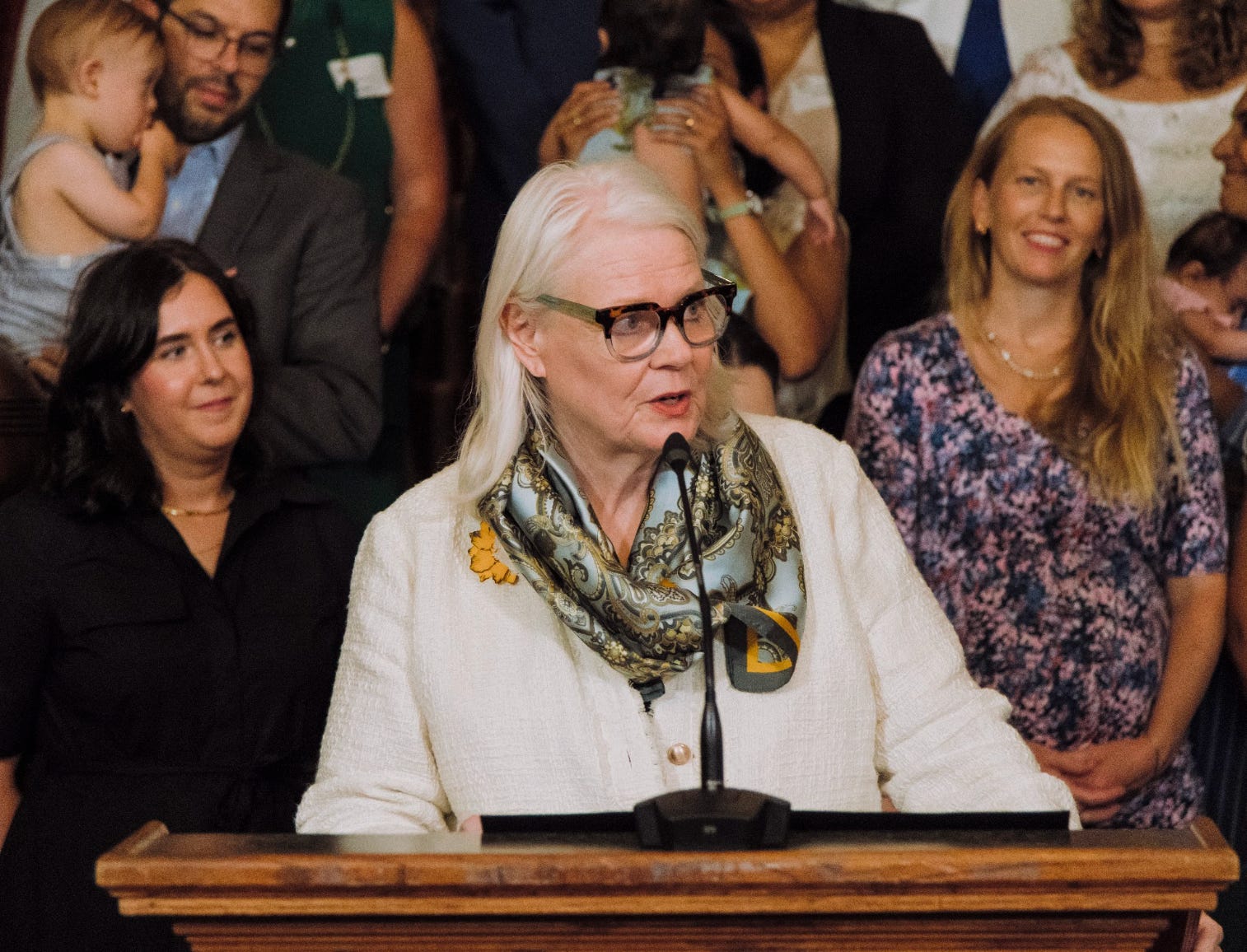
(Speaking of credit, like anything in government, this success is the product of many people. But Staci Meyer deserves enormous recognition for her role here. To meet legislators where they were — literally — she drove hours across the state, visiting melon farms, AAA baseball games, and many a veranda. And in the end, the bill passed unanimously.)
North Carolina is also just a good test case. Its system has real due process protections, which makes it unlike many other Southern states, as Judge Glock recently reminded us. But it has no civil service exams, no “rule of three” forcing managers to hire only from the top scorers on a multiple-choice test, and no collective bargaining agreements, which makes it unlike most Northern ones. It’s not the only state with this particular mix, but it’s a workable middle ground for testing a new model with something to say to almost everywhere else.
The team at Recoding America has written about many of these ideas before, and we couldn’t be more proud to be working alongside North Carolina on this. But I’d make the case for everyone to watch this, because of the moment states are walking into.
Every state, and the federal government right along with them, is about to be asked to do a lot more than keep the lights on. Some of that will be forced on them the way it always has been by crisis, whether its the next pandemic, the next climate shock or something else. But some of it is being forced on them right now by AI, which is raising the bar on what people expect from government at the same time as it’s changing what government will need to deliver. People are already using AI to fight insurance denials and decode medical bills. It won’t be long before they expect to apply for benefits or file their taxes by uploading a document and answering a few plain questions, not by filling out even the best-designed form. Government is going to be asked to move faster, for people with a lot less patience for the status quo. None of that is possible without the right workforce.
This law doesn’t guarantee North Carolina gets it right. But it’s the first real reason to think the system could become manageable again: one where a manager can give a raise to a good employee who is doing well, tell a struggling one what needs to change, and let someone go when it’s warranted. Governments everywhere will have to make bets like these if they want people able to use judgment fast enough to keep up with what’s coming.
Liz and the team at DMV look forward to no more 4 a.m. dumpster lines. But North Carolinians may be looking forward to more improvements than that. Staci and her team aren’t just fixing hiring, performance, or discipline one piece at a time. They’re trying to fix the thing that makes fixing a DMV require a miracle in the first place. More power to them, and may other states take notice.
The absolute key point here is “the system only works when it is circumvented.” If we don’t want exceptional work to literally be the exception, we have to fixate on how to make it possible for agencies to actually deliver against the mandates they already have.
Very important work. The foundation of civil service reform is talent management.